

Issue #1 · October/November 2026
Welcome
Welcome to the first issue of The Creekside Field Report, a free monthly read for landscape contractors, designers and installers across the Mid-Atlantic. Each month you'll get what's moving in the trade, what to do in the field, what to scout for, and the rule changes that touch your jobs. Five minutes, no fluff.
Industry Trends
1. Native demand keeps climbing, and the rules are steering it. Nursery Management's first Native Plant Market Report (281 respondents) found that customer demand for natives continues to climb. NALP's 2026 plant-trends roundup says demand is highly regional and often driven by legislation, water restrictions or low-maintenance goals. You can see that locally: Fairfax County's updated tree table now favors native, tolerant species for canopy credit (see Permit News).
Fall is a strong window for B&B shade trees. UMD Extension says most B&B and container trees can go in any time the soil isn't frozen. For jobs with municipal or HOA native requirements, two natives worth knowing:
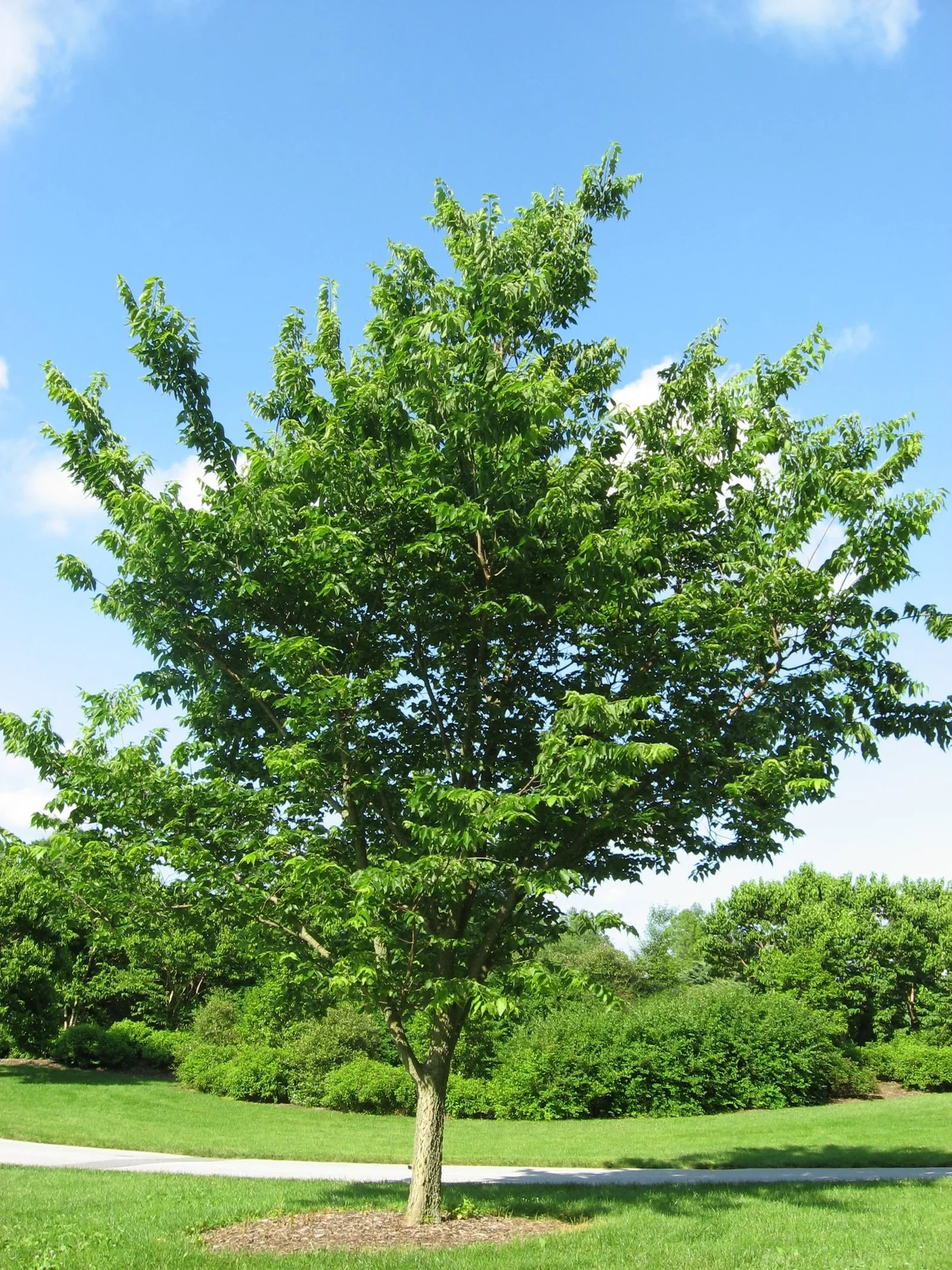
- Common hackberry (Celtis occidentalis). UMD Extension calls it a great urban choice because it withstands harsh conditions. NC State Extension says it transplants easily and tolerates wind, urban conditions and varied soils.
- American hornbeam (Carpinus caroliniana). It's native throughout Maryland and fits sites with shade and imperfect drainage (UMD Extension). One flag: The Morton Arboretum rates it difficult to transplant and recommends spring planting. If you spec it this fall, plan on extra aftercare.
2. Labor: the winter H-2B window is closed. USCIS reached the H-2B cap for the first half of FY 2027. Sept. 4, 2026 was the last receipt date for new cap-subject petitions with start dates before April 1, 2027. The next window is for April 1 to Sept. 30, 2027 start dates. Last cycle, the second-half cap was reached on March 10, 2026, so spring filers should file early.
3. Maryland's stormwater update is still pending. MDE's draft update to the state stormwater regulations (COMAR 26.17.02) and design manual uses newer rainfall data and adds statewide, climate-adjusted 10-year storm peak-flow control. MDE projected a formal proposal in spring 2026 and final rules this fall. As of the Maryland Register's pending-proposals table (through the Oct. 16 issue), it hadn't been formally proposed. Nothing has changed yet. If you build or plant ESD practices like bioretention, watch for it.
Seasonal Tip: Get fall installs rooted
- Plant early in the window. Hardy trees and shrubs can go in until the ground freezes, and the earlier you plant, the more time they get to establish (UMD Extension). A handy rule of thumb from University of Missouri Extension: plant when early-morning soil temperature reads 50°F or higher for a few days running. Don't plant evergreens late in the fall because of winterburn risk. Save fleshy-rooted trees (dogwood, magnolia, willow oak, tulip poplar, yellowwood) for spring.
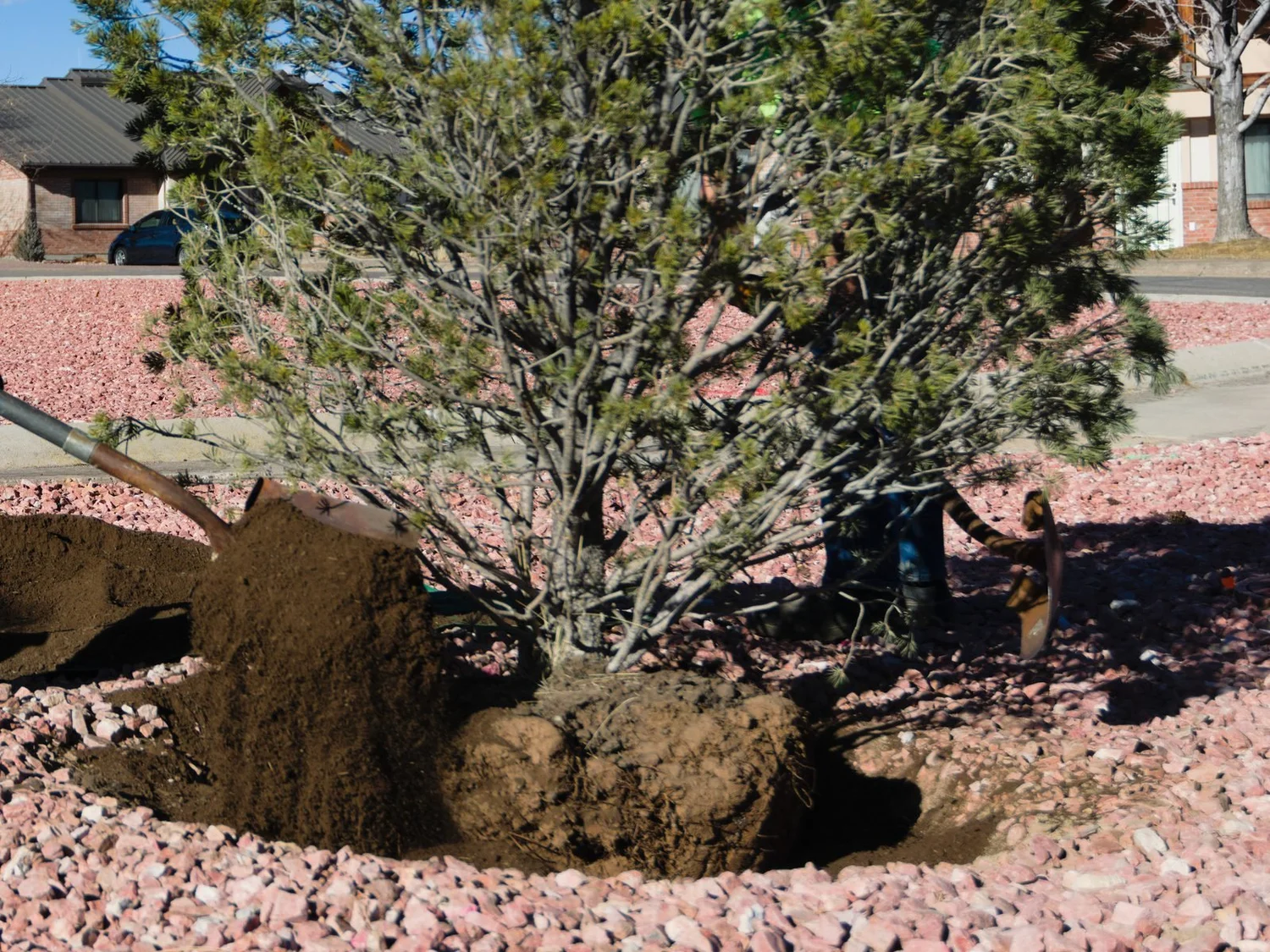
- Find the flare first. Many trees arrive with extra soil over the roots. Pull it back until the flare shows, then set the flare at grade. Dig no deeper than the ball (measured from the flare) and at least twice as wide. Don't loosen the soil under the ball, or the tree will settle too deep.
- Handle B&B by the ball. Never lift by the trunk. Keep the ball moist before planting, because natural burlap wicks water out of it. Once the tree is set, cut the twine and remove the burlap, or cut it back at least 12 inches from the top. Pull out as much synthetic wrap as you can. Remove the wire basket, or at least the top 12 inches. No burlap or wire should show above grade.
- Backfill and water in. Backfill with native soil, with no organic matter in the hole and no nitrogen at planting. Settle the soil with water instead of stomping it.
- Mulch out, not up. Spread 2 to 4 inches, less on poorly drained soil. Keep mulch off the trunk and leave the flare showing (Penn State Extension).
- Keep watering. Water when the soil under the mulch and in the ball is dry a few inches down. Keep checking through the first two years, winter included, but don't water frozen ground. Remove stakes after one year.
Planting steps: UMD Extension unless noted.
Pest & Disease Watch
Spotted lanternfly egg masses
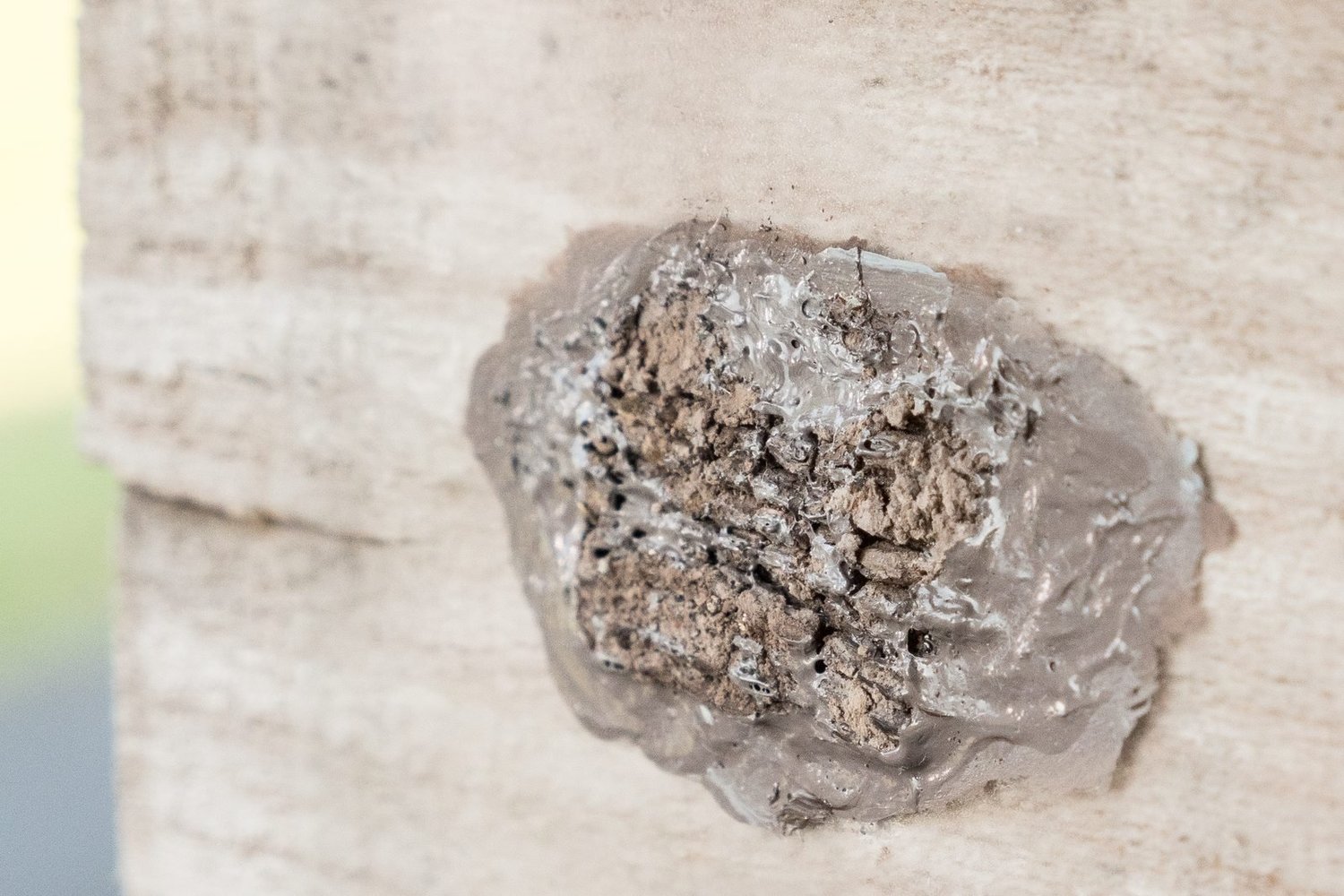
- Look for: gray, putty-like smears about 1 inch long that dry to look like cracked mud. Each holds 30 to 50 eggs. Check trees, stone, fences, trucks, trailers and equipment. Most are laid in October, and laying continues until the first hard frosts (USDA APHIS; Penn State Extension; PA Dept. of Agriculture).
- Do: scrape masses into a bag or container of rubbing alcohol or hand sanitizer, not onto the ground. Virginia Tech advises scraping reachable masses from November through early April. Check vehicles before every move.
- Permits: Maryland's quarantine has been statewide since March 2026. Businesses moving regulated items (plants, construction waste, vehicles) need a permit, which comes from a free Penn State Extension online course. MDA says the permit is valid in MD, VA, PA, NJ and DE.
Box tree moth on boxwood
- Where: as of September 2026, MDA's quarantine covers nine Maryland counties: Allegany, Caroline, Cecil, Frederick, Garrett, Harford, Kent, Queen Anne's and Washington. Box tree moth has also been confirmed in VA, PA, DE and WV (UMD Extension, updated Oct. 1, 2026).
- Look for now: caterpillars build overwintering pouches of silk and leaves around October. Also check for chewed leaf undersides, wispy webbing, green-brown frass pellets and brown, see-through plants. The caterpillars are green and yellow with stripes and a black head.
- Do: confirm the ID through Ask Extension or MDA's reporting form before treating. UMD advises against preventive sprays. Hand-pick or prune small infestations into soapy water, and double-bag infested material for the trash. Moving boxwood into or out of a quarantine zone requires an MDA certificate of inspection and a compliance agreement. Inspect every boxwood before you install it.
Building & Permit News
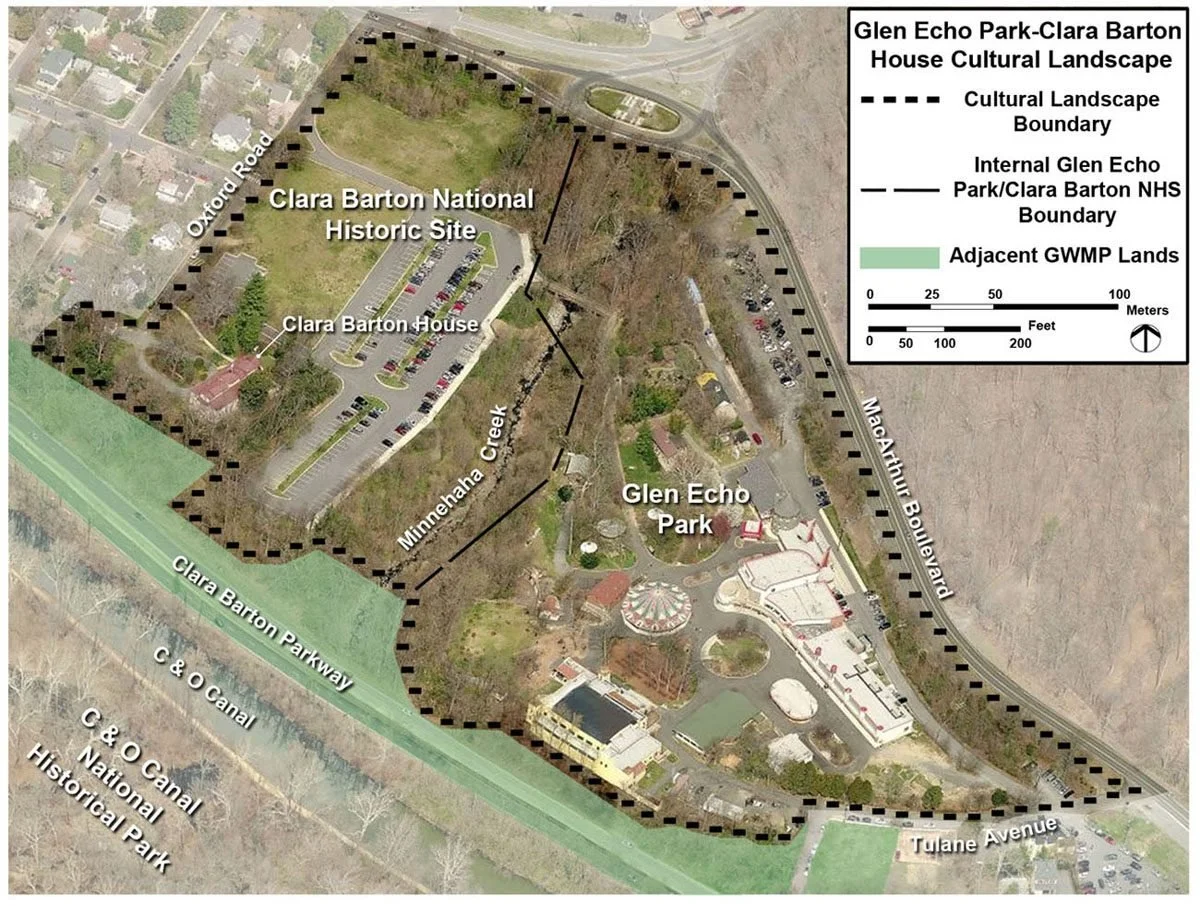
Frederick, MD (Oct. 15, 2026): forest conservation update passes. The City Council voted unanimously to update its forest conservation law, which applies to projects on parcels of 40,000 sq ft or more. The version introduced Oct. 1 (G-26-13) requires a binding five-year maintenance agreement, backed by financial security, for afforestation and reforestation plantings. Developers raised cost concerns. Expect plantings to be watched longer, and confirm the final text with the city. (Frederick News-Post, Oct. 17; City of Frederick)
Fairfax County, VA (adopted Aug. 25, 2026; effective Aug. 26): new tree list for canopy credit. Amendments to Public Facilities Manual Chapter 12 update Table 12.14 to include more native, environmentally tolerant and commonly available species. They also drop species that aren't recommended and revise canopy credit multipliers. The changes apply to Tree Conservation Plans submitted on or after Aug. 26. Plans submitted earlier can stay under the old rules if they're approved by Dec. 31, 2026. (Fairfax County LDS, notice dated Oct. 6)
Howard County, MD (effective July 1, 2026): unforested stream and wetland buffers must be planted. Under a county policy memo applying state Forest Conservation Act changes, once a project meets its reforestation requirement, unforested stream and wetland buffers on the site must be planted and protected by easement, with limited exceptions. Clearing priority forest now requires notice to neighbors 20 days before plan approval. Site plans that were technically complete before July 1 stay under the old rules if their originals are signed by Dec. 31, 2026. (Howard County DPZ memo, July 2; revised Sept. 21)
Prince George's County, MD (Oct. 13, 2026): tree-planting grants. The Chesapeake Bay Trust awarded the county $1.582 million to plant native trees on municipal, institutional and residential properties. It also awarded $1 million to the county's Department of Public Works & Transportation for tree plantings and road beautification, and planting starts this fall. (Chesapeake Bay Trust, Oct. 13)
Plant Spotlight: Pyramidal European Hornbeam
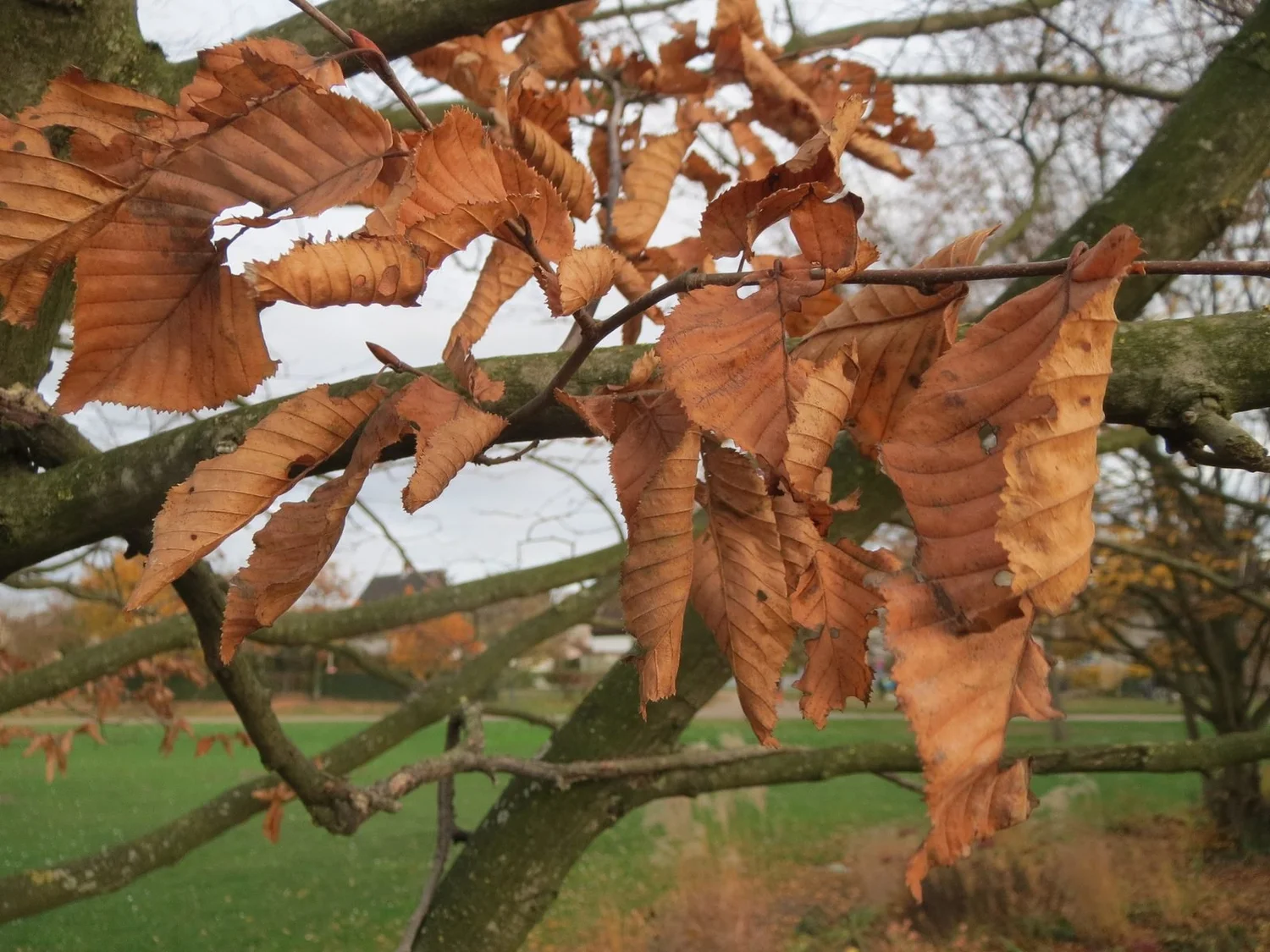
Carpinus betulus 'Fastigiata' · For a narrower option, look at 'Frans Fontaine'.
Why fall: fall is prime B&B planting time here. Cool air and warm soil let roots establish through winter with less watering than a summer install. Morton Arboretum rates the species a moderate transplanter, which is one more reason to plant it now and water it right. NC State Extension lists it as tolerant of clay and urban conditions, which fits plenty of MD, VA and DC sites.
Uses: it starts tight and upright, then widens to an oval with age. Morton lists 'Fastigiata' at 30 to 40 ft tall and 20 to 30 ft wide. 'Frans Fontaine' runs about 35 by 15 ft and holds its narrow form longer. Use it for narrow screens, allées, and street or parking-lot islands. For a living wall, plant 6 to 10 ft on center. A single tree also works as a formal accent near an entry. It often holds its dried leaves into winter (marcescence), which gives partial winter screening, but it isn't an evergreen. The dense branching takes shearing well as a hedge.
Care: full sun to part shade, and it adapts to most well-drained soils. It has few serious pests (Morton; NC State). Water deeply after planting and through the first season. Mulch 2 to 3 inches and keep it off the trunk. It needs little pruning unless you shear it.
Ask us about sizes for your next screen job.
Questions or quotes?
Call or text (443) 586-7022 · ops@creekside-nursery.com · Mon–Fri, 7–4
Free delivery on qualifying orders. · creekside-nursery.com
Trade only · Serving the Mid-Atlantic · MD · VA · PA · DC
Creekside Nurseries LLC · Every fact in this issue is sourced. Sources: available on request at ops@creekside-nursery.com.
Get the next Field Report in your inbox
Trends, seasonal tips, pest & disease watch and local permit news. One useful email a month, free for the trade.
Sign up freePhoto credits:
- Header: fall foliage, Petersburg National Battlefield, VA. National Park Service. Public domain (U.S. Government work).
- Industry Trends: common hackberry. Wikimedia Commons. Public domain.
- Seasonal Tip: planting a root ball. U.S. Space Force. Public domain (U.S. Government work).
- Pest & Disease Watch: spotted lanternfly egg mass. USDA. Public domain (U.S. Government work).
- Building & Permit News: Glen Echo Park site plan. National Park Service. Public domain (U.S. Government work).
- Plant Spotlight: European hornbeam. Wikimedia Commons. CC0 1.0 (public domain dedication).
